



Discover the world of Stevia.
Explore the plant, understand its metabolism, learn about safety evaluations, and discover the role of stevia in a reduced-sugar lifestyle.
A small leaf.
A remarkable sweetness.
Stevia is a plant native to South America, recognised for the naturally sweet compounds found in its leaves.
Stevia rebaudiana belongs to the Asteraceae family. The plant has a long history of traditional use in parts of South America, where its leaves were used to sweeten drinks and other preparations.
Stevia leaves contain compounds called steviol glycosides, including stevioside and rebaudioside A. These compounds are responsible for much of the plant's intense sweet taste.
Today, purified steviol glycosides are used as high-intensity sweeteners in a variety of foods and beverages. Because they are intensely sweet, only small quantities are needed.
Whole stevia leaves, crude extracts and purified steviol glycosides are not interchangeable. Their composition, processing and regulatory status can differ.
Steviol glycosides are the sweet-tasting compounds found in stevia leaves. Purification and formulation influence the properties of the final ingredient.
From sweet compounds
to their breakdown.
The body processes steviol glycosides differently from ordinary sugars. Their chemical structure helps explain what happens after consumption.
Steviol glycosides contain a steviol backbone with glucose groups attached. They pass through the upper digestive tract largely intact before gut bacteria break them down.
Pass through the upper digestive tract
Steviol glycosides pass through the stomach and small intestine largely intact, with limited absorption of the original compounds.
Breakdown in the colon
Gut bacteria hydrolyse the glycosides, removing their glucose groups and producing steviol.
Metabolism by the liver
Steviol is absorbed and processed primarily by the liver, where it is converted mainly into steviol glucuronide.
Excretion from the body
Steviol glucuronide is eliminated primarily through urine in humans.
High-purity steviol glycosides are intensely sweet and are used in very small quantities. At typical sweetening levels, they contribute negligible dietary energy. The total calories in a finished product depend on its other ingredients.
Evidence matters.
So does the amount.
Food safety evaluations consider the specific substance, the amount consumed, toxicology evidence and the conditions in which an ingredient is used.
The Joint FAO/WHO Expert Committee on Food Additives (JECFA) established an Acceptable Daily Intake (ADI) of 0–4 mg per kilogram of body weight per day for steviol glycosides, expressed as steviol equivalents.
An ADI estimates the amount of a substance that can be consumed daily over a lifetime without appreciable health risk, based on available scientific evidence. It is not a recommended target for daily consumption.
Expressed as steviol equivalents
How should the ADI be understood?
- The reference is based on body weight.
- The figure is expressed as steviol equivalents, not the total weight of a stevia product.
- Different glycosides have different molecular weights, so the quantities are not directly interchangeable.
- Total exposure can come from multiple foods and beverages containing steviol glycosides.
Regulatory assessments concern specified ingredients and conditions of use. Permitted ingredients and uses can vary by country.
Whole leaf versus purified sweeteners
Safety assessments for high-purity steviol glycosides should not automatically be applied to raw leaves, crude extracts or every product marketed as stevia.
Choose food-grade products, follow the label and check local regulations. For individual medical or dietary concerns, consult a qualified healthcare professional.
Why explore
stevia?
Stevia-derived sweeteners offer intense sweetness in small amounts. Their most established practical role is helping replace sugar in suitable foods and beverages.
Potential advantages depend on the specific product, what it replaces and the overall diet.

Low-calorie sweetening
High-purity steviol glycosides provide intense sweetness in small quantities, contributing negligible energy at typical use levels.
Reduce added sugar
Replacing sugar with a suitable stevia sweetener can reduce added sugar in a recipe or beverage.
Everyday versatility
Stevia sweeteners can be used in selected beverages, sauces and recipes, depending on the formulation.
Non-sugar sweetening
Steviol glycosides are not sugars and generally have little direct effect on blood glucose at typical sweetening quantities.
Formulation flexibility
Different glycosides and blends have different sweetness profiles, aftertastes, solubility and heat stability.
Tooth-friendly sugar replacement
Replacing fermentable sugars with a non-sugar sweetener can reduce sugar available to cavity-causing oral bacteria.
Weight-management support
Replacing sugar with stevia may help lower calorie intake when it meaningfully reduces the energy consumed. It is not a weight-loss treatment.
Reduced-sugar choices
Stevia can be one option for people looking to reduce added sugar. The overall dietary pattern matters more than a single ingredient.
Ongoing research
Researchers are studying possible effects beyond sweetness. Therapeutic benefits are not established, and stevia should not replace prescribed treatment.
These are potential practical advantages, not guarantees of improved health. Evidence for effects on weight, blood pressure, diabetes and other medical outcomes varies. Product formulation and what it replaces make a difference.
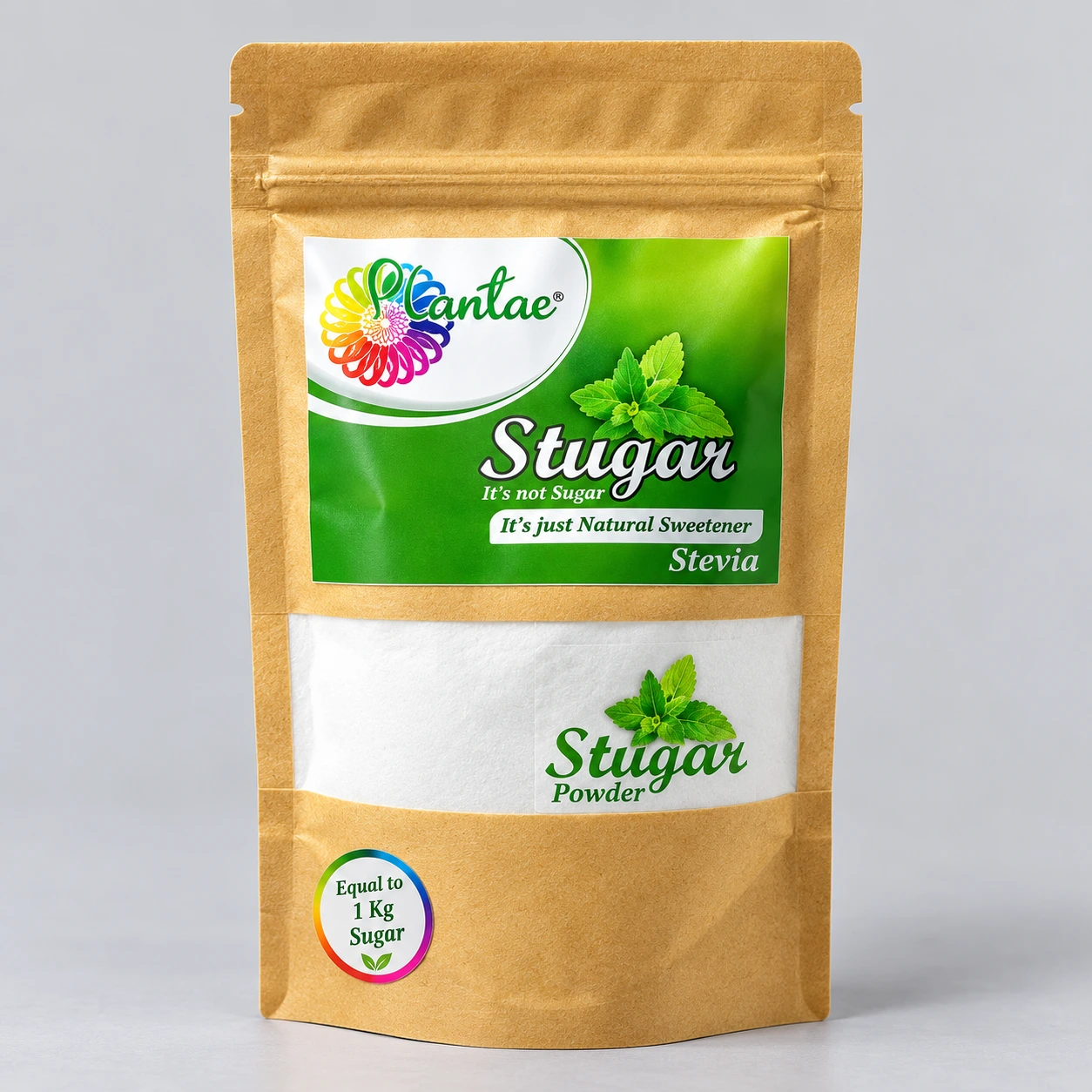
Stugar Stevia Powder
It's not sugar. It's a natural sweetener inspired by stevia leaves. Discover a healthy calorie-free way to sweeten your tea, coffee, smoothies, cereals, and baked recipes with Stugar Powder from Plantae.
Price and availability on Amazon may vary.
You will be redirected to Amazon to view the listing and complete your purchase.
Manufacturer: Plantae · Vegetarian product · Net quantity: 120 g
A little sweetness,
inspired by nature.
Stugar is a stevia-based sweetener from Plantae for people looking for an alternative to conventional sugar. Keep this generous 120 g pouch in your kitchen for all your everyday drinks and recipes.
Sweeten Your Tea & Coffee
Add Stugar Powder according to your taste for a rich, delicious sweetness with no bitter aftertaste.
Smoothies & Cereals
Blend into fresh morning smoothies or sprinkle over oats and cereals for daily energy and weight management.
Baking & Cooking
An all-purpose sweetener that cooks and bakes like sugar. Great for making your favorite sweets and sauces.
The details
that matter.
Learn more about Stugar before placing your order. For ingredients, directions, storage and other product-specific information, please check the packaging and the Amazon listing.
| Brand | Stugar |
|---|---|
| Manufacturer | Plantae |
| Product Type | Stevia-based sweetener |
| Item Form | Powder |
| Net Quantity | 120.0 Grams |
| Speciality | Vegetarian, Natural |
| Product Benefits | Weight Management |
| Country of Origin | India |
| ASIN | B093SQNBDY |
| Listed Price | ₹450 |
Make room for a
different kind of sweetness.
Explore Stugar Stevia Powder (120 g Pouch) on Amazon and check the current product details, availability and price.
Buy Stugar on Amazon